
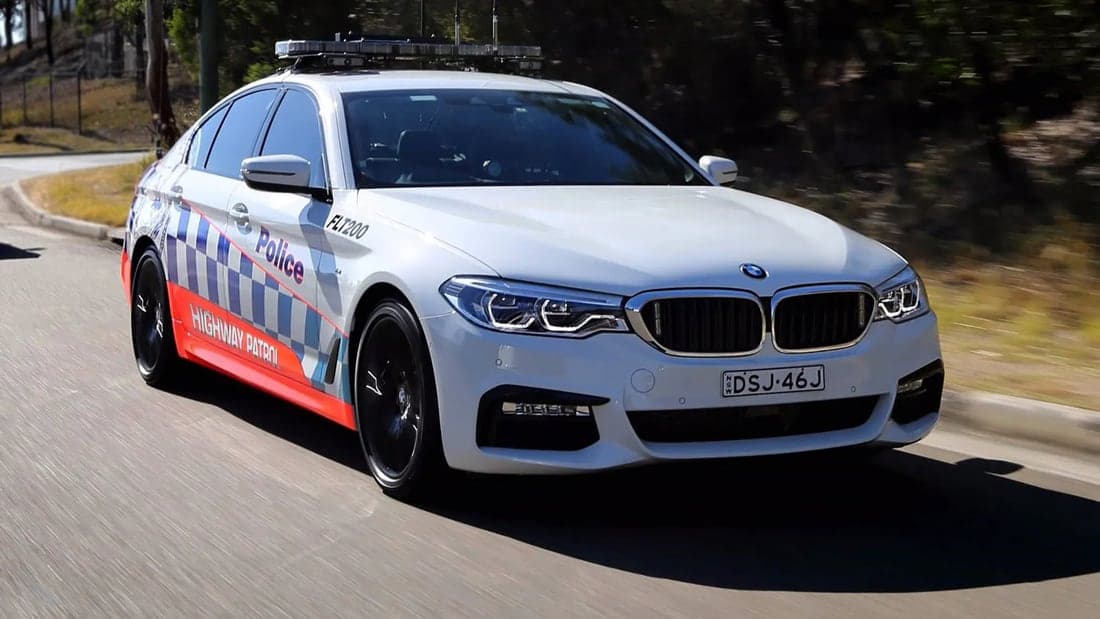
Patrol cars and their kit, ready every shift.
Start of shift checks for general duties, highway patrol, divisional vans, pod utes and specialist vehicles, and each station’s readiness by shift: speed and breath devices with their certificates, custody transport, cameras and radios, body armour and CEDs, consumable lots and each car’s speedometer certificate. Behind them, the fleet: replacement by the force’s own rules, leases, accidents, lease returns and donated vehicles.
Why it matters
Vehicles change hands every shift
A car can have three crews in a day. When damage or a missing item is found, you need to know which shift it happened on and who held the vehicle.
The kit matters as much as the car
Road control kits, first aid, defibrillators and breath testing devices travel in the vehicle and need to be there, working and in date.
Each device needs its certificate
Every speed and breath device carries its own calibration certificate, with an interval set by state law. It has to be in force when the device goes out, wherever the device is.
Warning systems must work first time
Lights, sirens, public address and message signs have to work before a priority job, not be discovered faulty during one.
What Escudo Emergency does for police
Warning systems
- Emergency warning lights and every siren tone, checked on every template, with a photo of the lights running
- Public address and rear message signs
- A fail restricts the vehicle and needs a photo
Radio and in-car systems
- Radio check with communications recorded against the shift
- Mobile data terminal, in-car video, speed detection self-test and duress alarm
- Portable radios counted as charged against par
Kits and issued equipment
- Road control kit: cones, road flares, stop and slow bats, tyre deflation device
- First aid kit, defibrillator and fire extinguisher
- Counts against par, with each shortfall recorded or restricting as you choose
Speed and breath devices
- Each device’s calibration certificate kept in the equipment register: never edited, only voided with a reason
- Rule packs for each Australian state and territory and New Zealand hold each device kind’s interval where the law sets one, marked to confirm where your procedures decide
- The officer scans the device and sees its certificate in force from the register, never typed; a device with none cannot be deployed from the phone
- Deployments with the start, mid and end checks the pack asks for, the operator, the minutes used and the certificate in force when it started
- A fitted device with no certificate in force raises a major defect on its vehicle
- A device pack per device: certificates, deployments and their checks, with a SHA-256 fingerprint
Police readiness board
- With police switched on, each station Ready, Restricted, Not ready or Not set against its shift profile
- Four lanes, vehicles, evidential devices, custody transport, and cameras and radios, with every reason listed
- Three more where the shift profile asks for them: Protective equipment, which is advisory and never takes the station past Restricted, First aid and safety, and Specialist capability for dog, public order, rescue and other specialist vehicles
- The status at each shift start, and planned reductions
- Changes acknowledged, and escalated to fleet managers after 15 minutes and org admins after 60
Body armour and CEDs
- A body armour register: serial, maker, model, level and size, with the panel and carrier warranty or stated-life ends typed from each label. The vest’s life ends at the earlier of the two
- An optional yearly inspection, labelled NIJ guidance to confirm against your procedures, off until the force switches it on
- CED device records: firmware, battery serial, last upload date and warranty end, a pre-use function or spark test recorded as a pass or a fail, and an optional monthly audit
- A CED issued and returned by scan with the serials of the cartridges that go with it
- The windows a function test and an upload are expected in are set by the force; Escudo sets none of its own
- Never says a vest protects anyone, never records the wearer, and never records a discharge, a firing log or anything about a person
Consumable lots
- Mouthpieces, oral fluid cassettes, standard alcohol solution by control number and supplier certificate, dry gas cylinders with their certificate of analysis and instrument, and CED cartridges with their serials
- Every expiry typed from the label: Escudo never works one out
- An expired lot in service holds back the lane it belongs to until it is replaced, or a supervisor moves it to training stock
- Recorded from the phone with or without signal, or on the dashboard
Camera status import
- The maker’s device list imported as CSV, with a step to match its columns: the Motorola VideoManager Equipment and Battery Audit reports are filled in for you to check, and Axon or other makers are matched by you
- Dock, last seen, software, state, whether assigned and any fault, matched to the register by serial number
- A camera whose latest status has a fault stops counting in Cameras and radios until a later import shows it clear
- Media, Incidents, Operator Recorder Summary and User Export files are refused outright. Location and video counts never leave your browser, and the maker’s user list is never stored. Never footage
Speedometer certificates
- Each police vehicle’s speedometer certificate: number, test date, tester and accreditation number, voided with a reason and never changed
- The rule pack’s interval: New Zealand 365 days, Queensland 182, South Australia 90, the ACT from the approved list, and New South Wales 12 months for the approved SDS CAN unit only. Elsewhere the force enters the expiry from the certificate
- Where the pack treats the car’s speedometer as evidential, a highway patrol car or a car carrying a speed device with none in force gets a major defect until a certificate is recorded
- The certificate shown on the speed device’s screen in the crew app for the car it goes out in
- New Zealand under-use hours for speed devices near the end of each calibration cycle
Operator certifications and insights
- Operator certifications recorded in People with the device kinds they cover
- A deployment by an operator with no current certification on record is noted on the phone and frozen on the deployment, never blocked
- Police insights over the last 90 days or any period: certificates in force week by week, deployments by operator certification, camera faults, lots expiring and speedometer certificates due
Fleet and lessor
- Replacement rules set by the force for each role: months in service, kilometres or engine hours, whichever comes first. Escudo seeds none, and published figures are shown as a guide only
- Each police vehicle due for replacement within 90 days or past it, under-used against the force’s floor in kilometres a month, or idle with no check or reading for the days set
- Lease fields on the vehicle: the lessor reference, lease start and end, agreed kilometres and the odometer at the start
- The kilometres over the agreed limit and a lease ending within 60 days, on the dashboard and as alerts to fleet managers. Never a charge or a cost
Accidents
- An accident reported from the phone, with or without signal: what happened to the vehicle, when and where, whether it can be driven and where it can be inspected
- The damage it caused linked from the walkaround drawing, with damage marked before the accident flagged as prior damage
- The damage raises a major defect for an officer to assess
- The police event number, the claim reference, the insurer and the lessor reference. Other vehicles as references only (registration, insurer and claim reference) unless the force switches on names and contacts
- An accident pack for the insurer and the lessor, with a SHA-256 fingerprint. Never the driver’s personal details, alcohol or drug questions, test results, speeds or who was at fault
Lease return
- A Lease return shortcut on the vehicle in the crew app once its lease ends within 60 days
- The lease return check: odometer, both sets of keys, the log book, eTag, fuel cards and log sheets out, fit-out and badges removed where the lessor asks, fuel level, spare wheel and tools, first aid kit, damage marked, and both parties sign
- A lease return pack: the odometer against the agreed kilometres, every answer, the damage marked up to the return and both signatures, with a SHA-256 fingerprint. It works out no charge
Upfitter acceptance
- A new vehicle acceptance check from the upfitter: fit-out against the build sheet, second battery and wiring, partition, radio and MDT, in-car video, the ANPR camera reading a test plate, and the pod where fitted
- Warning light items from the WA Department of Transport approval: the roof light seen at 200 m, no lens in the driver’s view, lights placed symmetrically and the switch within reach, each labelled confirm for your state
- The upfitter’s name, job number and fit-out warranty, recorded on the vehicle too
- Each defect found is reported and sent back with a work order naming the upfitter as the workshop
Donated assets
- Donated vehicles and equipment recorded with the donor, the programme, the donor’s representative, maintenance support and the training given
- The handover signed by both parties: the receiving force and the donor’s representative
- A donor pack per programme: handovers and signatures, checks, days on run, defects, servicing, distance, disposals and equipment, with a SHA-256 fingerprint
- Shared with the donor read-only by a link that ends after the days set, 30 at most. Each opening is logged and the link can be revoked at any time. The receiving force owns the records
Custody, cameras and radios
- An after custody transport check on vans and pod utes: a biohazard found keeps the vehicle off run until an officer signs the clean
- A failed critical pod item takes the vehicle off custody transport on the board
- Body-worn cameras and radios taken and returned by scan, and flagged when not back a set time after the shift ends
- Stocktakes with expected, found and variance, counted by two people
Handover and damage
- Handover at shift change, accepted by the next crew
- Framed walkaround photos stamped with time, place and heading, so damage can be dated to a shift
- Damage marked on a drawing of the vehicle for a supervisor to review
40 starter checks
- Start of shift for general duties, highway patrol, vans, pod utes, motorcycles, 4WD, unmarked and dog vehicles
- Lidar, radar, mobile speed camera, evidential breath, screening devices, oral fluid kits and the speedometer test
- Body-worn camera dock, radio rack, holding room, armoury equipment stocktake, body armour and road kit
- After custody transport, the biohazard clean, the New Zealand prisoner transport monthly check, new vehicle acceptance from the upfitter and the leased vehicle return to the lessor
Vehicle and equipment only, by design
- Escudo Emergency covers the vehicle and its equipment only
- It records devices, never the people tested, readings, offences or footage, and holds no operational, intelligence or evidential records
- Firearms are not recorded
- Records stay in Australia and are separated from every other organisation
Report a fault the moment it is found.
Nobody waits for the next check or a phone call to the station. The crew who finds the problem reports it there and then, and the vehicle's status follows.
- 01Photograph it
From the vehicle screen, any time: on a job, at the hospital, on the sand. Live camera only, never the gallery.
- 02Say how serious
Critical takes it off run, major restricts it, minor is recorded. The crew decides on the spot.
- 03Everyone knows
The status changes on the board, a critical fault raises an alert for the officers in the dashboard, and the workshop has the photo, as soon as the phone has signal.
Highway patrol · start of shift
Every item decides what a failure does to the vehicle. That is what turns a form into a readiness system.
An illustration. Your items, limits and outcomes come from your own procedures and equipment, and every template for a vehicle or vessel starts with the lights and siren checks.
The record your obligations call for
Calibration authorities, your procedures and your regulator decide what must be checked and how often. Escudo Emergency records that it was done, on which device and by whom.
Escudo Emergency works out readiness from your own records. It makes no finding about a device or its results, never says that an officer may drive or test, and never rules on a station’s obligations.
- Every check kept against the exact template version it was completed on
- An append-only audit log of who did what, when and where, which nobody can edit, including us
- Photos taken on the live camera and stamped on the phone with time, GPS position and compass heading
- A plain evidence rating on every walkaround, so a rushed or incomplete walk stands out
- Service, test and defect history for every vehicle and item of equipment
- Check records exported as a spreadsheet for audits, insurers and investigations
- All data and photos stored in Australia, in Sydney
Also suits transit, security and protective services fleets.
Other services
See it with your fleet
Send us one of your check sheets. We will build it as a walkaround and show you it running on a phone, with the status and records it produces.
Or email us: info@escudoready.com