
Rescue vessels checked before every launch.
Pre-launch checks for rescue vessels, rescue water craft, tenders and tow vehicles, and with marine switched on, a board that shows which vessels can go now, how far and with whom, by your own records, with the unit’s activations, radio watch, drills, safety records, engines and crew competencies.
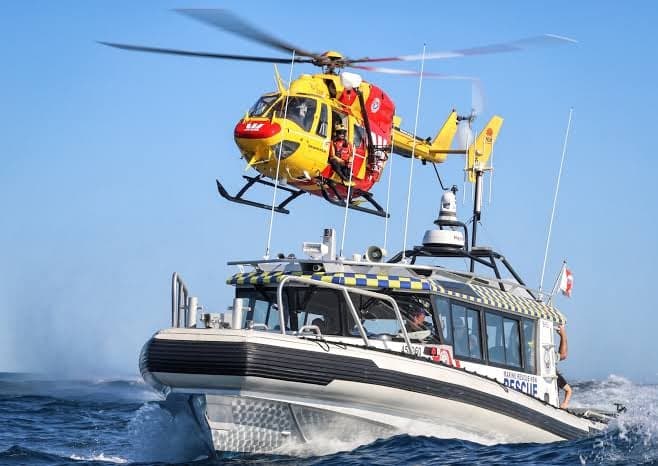
Why it matters
A vessel has more to check than a vehicle
Engines, bilge, steering, navigation lights, safety gear and radio all have to be right before leaving the berth.
Safety equipment expires
Flares, EPIRB batteries and release units, liferafts, lifejackets and extinguishers all carry dates, and so does each vessel’s permission: a certificate of survey, or the yearly declaration for a small vessel under Exemption 02. Most units track them on paper in the office.
Who can skipper what
A skipper’s qualifications set how far a vessel can go. When the crew changes, so does what the unit can offer, and the duty officer needs to know before the pager goes.
Engine hours drive servicing
Outboards and inboards are serviced by hours. If hours are not read at every check, services are missed or done early.
Skippers and crews rotate
Volunteer crews change from day to day. What the last crew found has to reach the next one.
The records come after the job
When the pager goes, the crew launches. The tasking, the times, the drills and anything that went wrong still need recording, and a marine incident needs its written report within 72 hours.
What Escudo Emergency does for marine rescue
Vessel walkaround
- Bow, starboard, stern and port positions, each with a shadowed outline to line up
- The helm photographed with the engine hour meters readable
- Hull, motors and fittings stamped with time, place and heading
Engines and hull
- Port and starboard engine hours read and photographed, never allowed to go backwards
- Engines start and idle, kill switch lanyard, steering at full lock both ways
- Bilge pumps on auto and manual, bungs in and hull dry
Signals
- Navigation lights and the sound signal on every vessel check, as the collision regulations require
- Warning lights and siren only if fitted, in no named colour: what a rescue vessel may show differs by state
- Searchlight and deck lights
Safety equipment
- Lifejackets, throw bags, flares and rescue gear counted against par
- Short on flares can restrict the vessel before launch
- First aid kit, rescue sled and anchor checked
Dates and servicing
- EPIRB battery and release unit, flares, liferaft service, lifejackets, extinguishers, and the vessel’s permission or yearly declaration
- Every beacon, raft and lifejacket in the equipment register with its history
- Servicing by engine hours or date, whichever comes first
Tow vehicles and trailers
- Tow vehicles checked with their own template
- Trailers get a four-position walkaround, lights and coupling
- The trailer check carries the ADR 38/05 brake rules: brakes over 750 kg, and on every wheel with a breakaway brake over 2,000 kg
- Handover from the evening crew to the morning crew
Availability board
- With marine switched on, each base Available, Limited, Not available or Not set against what it declares: vessels, furthest area, night and tow
- What the base can do now in one line, for example “Offshore to 30 nm, night yes, tow yes”, from the best crewed vessel
- Four lanes, vessels, crew, safety equipment, and base and radio, with every reason listed. Surf beaches have three instead: craft, patrol and gear
- A vessel on a job is not available for another, and the line shows what the next crewed vessel can do
- Changes acknowledged with who outside was told, and escalated to fleet managers after 15 minutes and org admins after 60
- Planned reductions for slipping and servicing
Activations and the radio watch
- Activations recorded from the phone or the dashboard: who tasked the unit (police, JRCC Australia, RCCNZ or self), the job number, the vessels and crew, and tasked, underway and back-at-base times
- Tasking to underway against your own target. None is published, so the target is yours
- People assisted kept as a number, never names, and engine hours out and in
- The radio watch opened and closed at each base, with who takes it over. A declared watch not open 15 minutes after its start, or the radio base check not done today, shows on the board
- When no watch is open, the board says who holds it, for example the State Communications Centre
Safety management records
- Drills recorded with who took part, each person signing for themselves, and kept at least 5 years. How often you drill comes from your risk assessments: Escudo Emergency sets no interval. Ten preset marine drills, from person overboard to night operations, are in the drill library
- A hazardous occurrence register: what happened, the investigation and the corrective action, closed by an officer and then fixed
- A marine incident raises a reminder of the report your rules ask for (in Australia, a written report to AMSA within 72 hours) and of a risk assessment review. Escudo Emergency never lodges a report and never decides what counts
- Each procedure reviewed on its interval, every 12 months under the Australian pack, with each revision recorded
- A marine readiness pack for any period: availability changes, activations, drills with signatures, occurrences, reviews and the radio watch, printable, with a SHA-256 fingerprint of its data
Crew and skipper bands
- Positions on each vessel: skipper, crew, navigator, engineer and radio operator
- Rule packs for Australia (Exemption 24, Marine Order 504 and the NSCV safety equipment standards), New Zealand and other markets, and two for surf clubs
- New Zealand, still to confirm: bands from the Maritime NZ Skipper Restricted Limits and Skipper Coastal/Offshore certificates, renewed every 5 years, with the unit’s Coastguard ratings shown beside them and never deciding the band, and a skipper plus two qualified crew as an editable default
- Exemptions held by a vessel or a master kept as a dated list, with a reminder in the dashboard 30 days before one ends. What an exemption allows stays with Maritime NZ and the unit
- The skipper’s band worked out from the competencies on record for the vessel’s length and area, with a first aider and a radio operator aboard, and the engineering units on vessels of 12 m and over
- Competencies recorded with the validated assessor who confirmed them
- Crews sign on from their phone, on base or on call, and see their own band on the vessel first
- From the phone, with or without signal: start an activation, tap underway and back at base, open and close the radio watch, record a hazardous occurrence and sign a drill
Permissions and certificates
- Each vessel’s particulars and permission: class, length, area, persons, MMSI, UVI and EPIRB HexID
- A lapsed permission or yearly declaration, or an overdue EPIRB, release unit or liferaft, takes the vessel off run; other overdue appliances restrict it
- Service certificates for liferafts, beacons and lifejackets kept with the item: never edited, only voided with a reason
- The rule pack’s service intervals set when an appliance goes on a vessel, and flares dated from manufacture
- Alerts as appliances, permissions, declaration and survey windows, and the competencies of crew signed on come due
Engines and the use log
- Each engine its own record, with its own hours and services, fitted and removed between hulls so the history goes with it
- Service schedules by hours or months, whichever comes first, from the maker’s intervals: Escudo Emergency sets none. An overdue engine service restricts the craft it is fitted to
- The SLSA IRB 25 hp motor chart as an optional preset for surf clubs; every other engine shows the maker’s intervals to confirm until entered
- The IRB and RWC use log from the phone, with or without signal: the craft, the engine, who was aboard and the hours. Engines with no hour meter take their hours from it
- Each person’s sea time over 12 months shown beside their IRB and RWC awards as evidence only: the assessor, never Escudo, decides proficiency
32 starter checks
- Pre-launch, after activation, weekly, night readiness, slipping, tow gear, waterjet and outboard flush
- IRB pre-launch and monthly, rescue sled, boat trailer and the launch set
- EPIRB and PLB, liferaft, lifejackets, flares, extinguishers, medical kit and crew equipment
- Radio base and rescue base, pre-departure briefing, drills with signatures, hazardous occurrences and procedure reviews
Report a fault the moment it is found.
Nobody waits for the next check or a phone call to the station. The crew who finds the problem reports it there and then, and the vehicle's status follows.
- 01Photograph it
From the vehicle screen, any time: on a job, at the hospital, on the sand. Live camera only, never the gallery.
- 02Say how serious
Critical takes it off run, major restricts it, minor is recorded. The crew decides on the spot.
- 03Everyone knows
The status changes on the board, a critical fault raises an alert for the officers in the dashboard, and the workshop has the photo, as soon as the phone has signal.
Rescue vessel · pre-launch
Every item decides what a failure does to the vehicle. That is what turns a form into a readiness system.
An illustration. Your items, limits and outcomes come from your own procedures and equipment, and every template for a vehicle or vessel starts with the lights and siren checks.
The record your obligations call for
Maritime safety requirements and your unit’s procedures set what must be carried and checked. Escudo Emergency keeps the record that it was, launch by launch.
Escudo Emergency records and works out availability from your own records. It never says a vessel is in survey or fit to go to sea, and the decision to launch stays with the skipper and your procedures.
- Every check kept against the exact template version it was completed on
- An append-only audit log of who did what, when and where, which nobody can edit, including us
- Photos taken on the live camera and stamped on the phone with time, GPS position and compass heading
- A plain evidence rating on every walkaround, so a rushed or incomplete walk stands out
- Service, test and defect history for every vehicle and item of equipment
- Check records exported as a spreadsheet for audits, insurers and investigations
- All data and photos stored in Australia, in Sydney
Also suits coastal volunteer groups, lake and river rescue, and port and harbour operators.
Other services
See it with your vessels
Send us one of your check sheets. We will build it as a walkaround and show you it running on a phone, with the status and records it produces.
Or email us: info@escudoready.com