
Volunteer rescue units, checked in minutes.
Storm, flood and road crash rescue units checked by volunteers who may be on a truck once a fortnight: short, plain checks on their own phone, with the same record behind them as a full-time service.
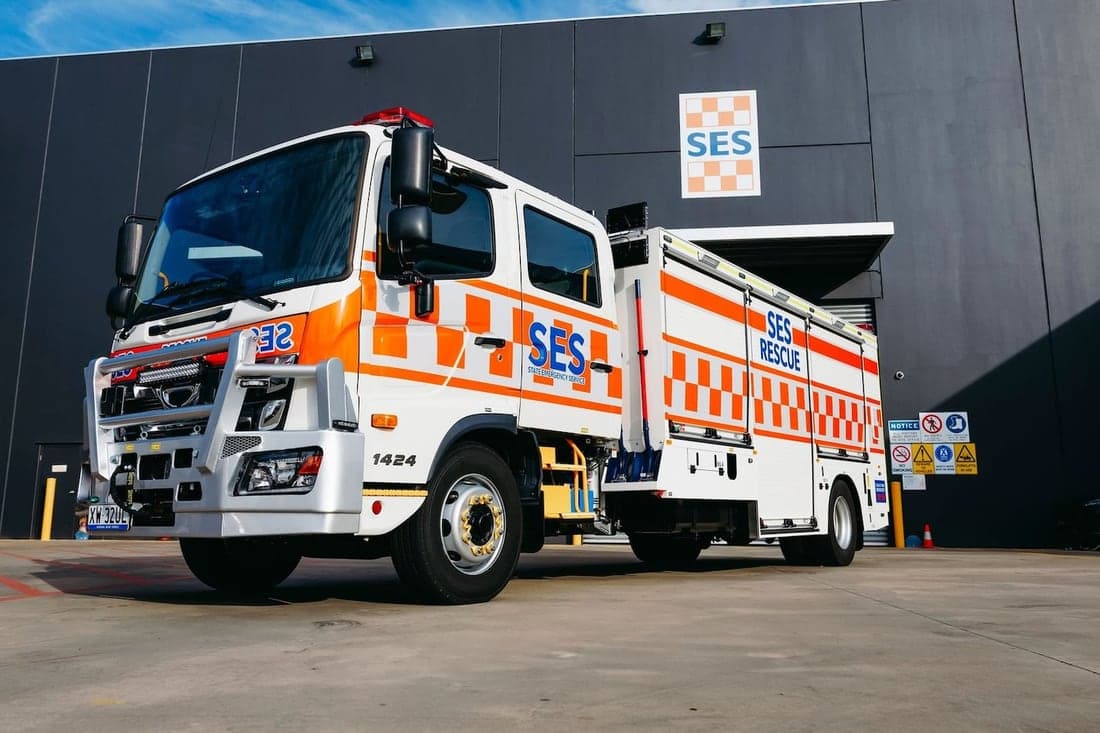
Why it matters
Volunteers have limited time
Checks happen at training night or just before a callout. They have to be quick, obvious and done on the volunteer’s own phone.
Units hold a lot of equipment
Chainsaws, generators, lighting, pumps, rescue tools and trailers each need to be present, charged and working.
Test dates are spread across units
Test and tag, rescue tool servicing and height safety inspections are often tracked on paper in each unit, if at all.
Controllers need each unit’s position
Before a storm season or a flood, region and state controllers need each unit’s capabilities, gear and people by the records, without calling each one.
What Escudo Emergency does for the SES
Short, clear checks
- Built for a volunteer on a fortnightly roster: one item at a time, with the reason shown
- One login across several units or organisations, with a role in each
- Works with no signal at the depot or in the field
Rescue equipment
- Road crash rescue tools, cutters, spreaders, rams and stabilisation gear
- Chainsaws, generators, lighting and pumps started and run
- Height and flood rescue equipment with inspection dates
Trailers and plant
- Trailers get their own four-position walkaround
- Lighting towers, generators and plant in the equipment register
- Servicing by engine hours for plant, or by date
Lights and siren
- Emergency warning lights and every siren tone, checked on every template, with a photo of the lights running
- Scene lighting and radio checked
Test and service dates
- Test and tag, harness inspections, tool servicing, extinguishers and first aid kits
- A warning before each lapses, and an overdue item can restrict the unit
Readiness at a glance
- One board for every vehicle across units
- Defects routed to the right unit and workshop
- Handover between crews during long deployments
Jobs, seasons and deployments
- Jobs recorded by the crew on the phone with the agency’s job number: vehicles show as Deployed until they are back
- Sandbags, tarpaulins and storm kits against your par, or a season par while your season is on
- Season readiness by region, and interstate deployments with the equipment record and the invoice reminder
44 starter checks
- General purpose, heavy rescue, command and high clearance vehicles, trailers and side-by-sides
- Flood boats before launch and after use, rafts, in-water rescue kit and lifejackets
- Road crash rescue tools, lifting and stabilisation, chainsaws, generators, lighting towers and pumps
- Height safety and vertical rescue kit, test and tag, radios, member PPE, the unit headquarters and the training night close-down
- Storm kit and sandbag stock, land search kit, before storm and flood season, the deployment kit and back from deployment
Seven films at one unit
A volunteer unit through a storm night, a training night with no signal, its flood boat, road crash rescue, the run-up to storm season, a task force interstate and a member’s courses. Start with the storm night.
Storm night at Corella Flats
Six members say they are available, two trucks show Deployed, and a saw fails its pre-use check.
Training night
Sign-in by code with no signal, skills practised, the assessor’s results and the signed close.
Flood boat 1
Limited for four lifejackets past their service, until the service certificate is recorded.
Road crash rescue
An accreditation date, a hose past its life retired, the tester’s file and a 03:10 callout.
Before storm season
The pre-season check, sandbags against season par, the region roll-up and the season pack.
Interstate deployment
People by role, kilometres and damage, five days logged and the invoice reminder at 90 days.
Skills, courses and the pack
An outside course sighted, a practice short at midnight, hours and the training pack.
Report a fault the moment it is found.
Nobody waits for the next check or a phone call to the station. The crew who finds the problem reports it there and then, and the vehicle's status follows.
- 01Photograph it
From the vehicle screen, any time: on a job, at the hospital, on the sand. Live camera only, never the gallery.
- 02Say how serious
Critical takes it off run, major restricts it, minor is recorded. The crew decides on the spot.
- 03Everyone knows
The status changes on the board, a critical fault raises an alert for the officers in the dashboard, and the workshop has the photo, as soon as the phone has signal.
Rescue unit · weekly check
Every item decides what a failure does to the vehicle. That is what turns a form into a readiness system.
An illustration. Your items, limits and outcomes come from your own procedures and equipment, and every template for a vehicle or vessel starts with the lights and siren checks.
The record your obligations call for
Your service’s procedures and your WHS obligations to volunteers set what must be checked. Escudo Emergency keeps the proof that it was done, unit by unit.
- Every check kept against the exact template version it was completed on
- An append-only audit log of who did what, when and where, which nobody can edit, including us
- Photos taken on the live camera and stamped on the phone with time, GPS position and compass heading
- A plain evidence rating on every walkaround, so a rushed or incomplete walk stands out
- Service, test and defect history for every vehicle and item of equipment
- Check records exported as a spreadsheet for audits, insurers and investigations
- All data and photos stored in Australia, in Sydney
Also suits volunteer fire brigades, and community and council emergency teams.
Other services
See it with your fleet
Send us one of your check sheets. We will build it as a walkaround and show you it running on a phone, with the status and records it produces.
Or email us: info@escudoready.com