
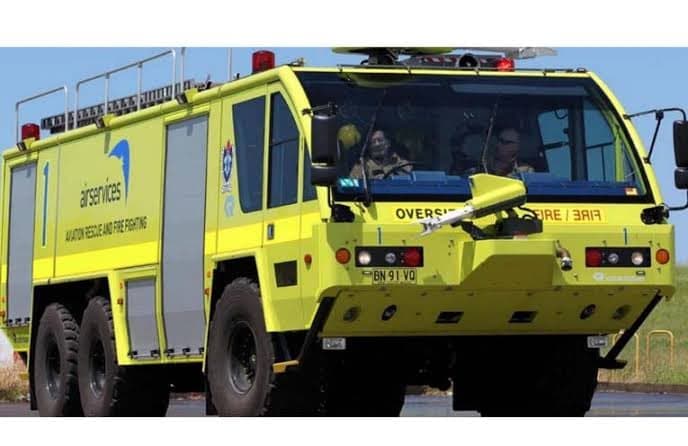
Aviation rescue vehicles, serviceable every shift.
Shift checks for major foam tenders and rapid intervention vehicles, foam tests, breathing apparatus, station and equipment checks, and with ARFF switched on, a live category board from the agent and crew on each appliance. Built from your own procedure in your own wording.
Why it matters
Cover depends on serviceability
Airport rescue cover depends on vehicles, agents and equipment being serviceable at the start of every shift, and on being able to show it.
Agents and discharge are measured
Water and foam in litres, complementary agent in kilograms, pump pressure and turret flow are readings and tests, not ticks.
Rosters run around the clock
Shift changes are frequent. The oncoming crew needs to know exactly what the last crew found and passed on.
Audits ask for the history
An audit asks for every shift’s serviceability record, not last week’s. It has to be complete and easy to produce.
The category depends on all of it
One appliance off run, a foam tank below its figure or a monitor operator out of date can reduce the category the airport can declare. Someone has to notice, record it and tell the right people.
Foam leaves a trail
Foam tests, laboratory samples, discharges and the clean-out when an appliance changes to fluorine-free foam all need a record that can be found again.
What Escudo Emergency does for aviation rescue and fire fighting
Your procedure, your words
- Built from your serviceability procedure, word for word
- Published versions are locked; a change creates a new version
- We do not interpret aviation regulations. Your procedure is the source
Foam tender and rapid intervention vehicle
- A daily walkaround for each: turrets, pump panel, lockers, cab, radios and every tyre
- Water and foam on board in litres, complementary agent in kilograms, each gauge photographed
- Minimum levels set by you from each vehicle’s rating, never by us
- A command and support vehicle check with radios, the incident command kit and first aid
Weekly and monthly tests
- Pump to rated pressure from the tank, with the discharge gauge photographed
- Roof, bumper and high reach turret flow, pump and roll, handlines and undertruck nozzles
- Tyre pressures measured and the tank refilled and read after the test
- Foam proportioning reading each month, with pump, hose and certificate dates tracked
- Foam induction, acceptance and laboratory sample templates, an annual pump test and an annual vehicle performance test
Vehicle and warning systems
- Walkaround with framed photos and every tyre
- Emergency warning lights and every siren tone, checked on every template, with a photo of the lights running
- Aviation and fireground radio checks; odometer and engine hours read with a photo
Breathing apparatus and equipment
- A shift check for each breathing apparatus set: pressure, leak test, whistle, mask and distress unit
- Monthly checks of extinguishers, thermal imaging cameras, rescue tools and PPE
- An equipment register with test history for every item, and the usual ARFF equipment types with typical test intervals for you to confirm
- After-use and annual flow tests for breathing apparatus, cylinder tests, breathing air quality and compressor service
The station
- Daily: crash alarm and alerting, bay doors and sensors, the watchroom and its radios
- Weekly: reserve foam and dry powder stock, refill point pressure and the breathing air compressor
Shift readiness
- Handover at every shift change, accepted by the oncoming crew
- The duty officer sees each vehicle’s status on one board
Defects and servicing
- A failed item restricts the vehicle or takes it off run automatically
- Before and after (close-out) photos on defects for ARFF appliances
- Work orders to the workshop, and servicing by hours, kilometres or date
37 ARFF starter templates
- Major foam tender daily, weekly and monthly, rapid intervention vehicle, command vehicle, breathing apparatus, station and equipment checks
- Foam tests, delivery receipts, discharge records, decontamination and replenishment after an incident or drill
- Hose, ladder, PPE, cylinder, breathing air, gas detector, AED, rescue tool, generator, watchroom, hydrant, test instrument and inshore rescue boat checks
- Limits are never set for you: your brigade enters its own
The category board, crew, foam and incidents
An organisation’s administrator switches ARFF on in Settings. Brigades covering an airport, airstrip or helipad, mine sites with an airstrip and industrial brigades then get the ARFF tools below, alongside every Escudo Emergency check.
Live category board
- One board per station, worked out from each counted appliance’s latest agent check (water, foam and complementary agent), its discharge rate and the number of appliances
- Compared with the station’s rules table and foam level, A, B or C, showing the highest category still met and why
- Planned reductions entered in advance, with their category and NOTAM reference
- Category events for each reduction, change and restoration, with the cause
- Alerts in the dashboard that escalate from officer to fleet manager to org admin if nobody acknowledges them
- A place to record the NOTAM reference against each event. The NOTAM itself is raised through your own process
Crew to category
- Riding positions on each appliance (officer in charge, driver, monitor operator, crew) with the competencies each needs
- Officers sign crew on and off on the dashboard, one position per person at a time
- With the station’s crew rule on, an appliance counts only while every required position is filled by someone current
- The board says why, for example “Crew: monitor operator not current”
Competency currency
- Competencies with validity periods, and validations with evidence
- A default list to add: the eleven core competencies at 90 days, a live hot fire exercise yearly and the ARFF course every four years, all editable
- A currency matrix with expiring and out-of-date competencies highlighted
Foam and agents
- Foam products with performance level and type, fluorine free or not
- Agent lots of foam concentrate, dry chemical powder and CO2, with batch, expiry, laboratory due date, quantity on hand and stock movements
- The reserve each station needs for its declared category, worked out from its rules table and shown against what it holds, with an alert when short
- Alerts for lots near expiry and laboratory samples due
Foam tests, discharges and decontamination
- Induction (proportioning) and acceptance tests on appliances, laboratory results on lots
- A failed appliance test raises a major defect, so the appliance is restricted until repaired and retested; a failed laboratory result quarantines the lot
- An alert when an appliance’s induction test is more than a year old
- A discharge register for training, tests, incidents and accidents: volume, location, how it was captured and the disposal reference
- Decontamination records, for example on a change to fluorine-free foam: drained volume, disposal, method, rinse cycles and samples before and after. The appliance is off run until an officer clears it
Incidents and standbys
- Aircraft accident, full emergency, local standby, building fire, first aid, hazchem and fuel spill
- Times from call to stand-down, aircraft, narrative, casualties, mutual aid and handover
- The appliances that attended and the agent each used. An appliance that used agent leaves the category count until its next agent check
- Foam used at an incident is added to the discharge register. Officers lodge and close the report on the dashboard
Drills, insights and the pack
- Drills and response-time tests, and response-time test points (each runway end or the furthest point) with an alert when one is due
- ARFF insights: time at the required category, minutes reduced by cause, NOTAM references recorded, time to acknowledge and restore, response times, appliances checked each day, crew currency and incidents
- An ARFF readiness pack, printed or as CSV files with a SHA-256 manifest
- Each submitted check sealed in a SHA-256 chain about an hour after it arrives. On request, we correct a check as a new version and keep the original
Rules tables
- ICAO default
- Australia (the CASA Part 139H rules, Manual of Standards August 2025 compilation): performance levels A, B and C, reserves, a 15-minute coverage window and 90-day competencies, with the record types and how long each is kept. The category figures are the ICAO values, to confirm
- New Zealand and Papua New Guinea, with values marked to confirm
- Other markets use the ICAO default. If your authority’s figures differ, we set up a table with them
- You choose a table for each station and confirm it against your own procedures
Alerts appear in the dashboard today. Incident, foam and crew records, including the discharge register, are kept on the dashboard; crews can also run the replenishment and foam discharge checks on the phone. Escudo Emergency records, works out and routes. Declaring the category and raising a NOTAM stay with your brigade and its procedures.
Report a fault the moment it is found.
Nobody waits for the next check or a phone call to the station. The crew who finds the problem reports it there and then, and the vehicle's status follows.
- 01Photograph it
From the vehicle screen, any time: on a job, at the hospital, on the sand. Live camera only, never the gallery.
- 02Say how serious
Critical takes it off run, major restricts it, minor is recorded. The crew decides on the spot.
- 03Everyone knows
The status changes on the board, a critical fault raises an alert for the officers in the dashboard, and the workshop has the photo, as soon as the phone has signal.
Major foam tender · daily walkaround
Every item decides what a failure does to the vehicle. That is what turns a form into a readiness system.
An illustration. Your items, limits and outcomes come from your own procedures and equipment, and every template for a vehicle or vessel starts with the lights and siren checks.
The record your obligations call for
Aviation regulations and your aerodrome’s own requirements set what must be checked. Escudo Emergency records it faithfully against your procedure. It does not tell you what the rules require.
- Every check kept against the exact template version it was completed on
- An append-only audit log of who did what, when and where, which nobody can edit, including us
- Photos taken on the live camera and stamped on the phone with time, GPS position and compass heading
- A plain evidence rating on every walkaround, so a rushed or incomplete walk stands out
- Service, test and defect history for every vehicle and item of equipment
- Check records exported as a spreadsheet for audits, insurers and investigations
- All data and photos stored in Australia, in Sydney
Also suits brigades covering an airport, airstrip or helipad, mine sites with an airstrip, industrial brigades, aerodrome safety vehicles and fuel farm emergency response teams.
Other services
See it with your fleet
Send us one of your check sheets. We will build it as a walkaround and show you it running on a phone, with the status and records it produces.
Or email us: info@escudoready.com